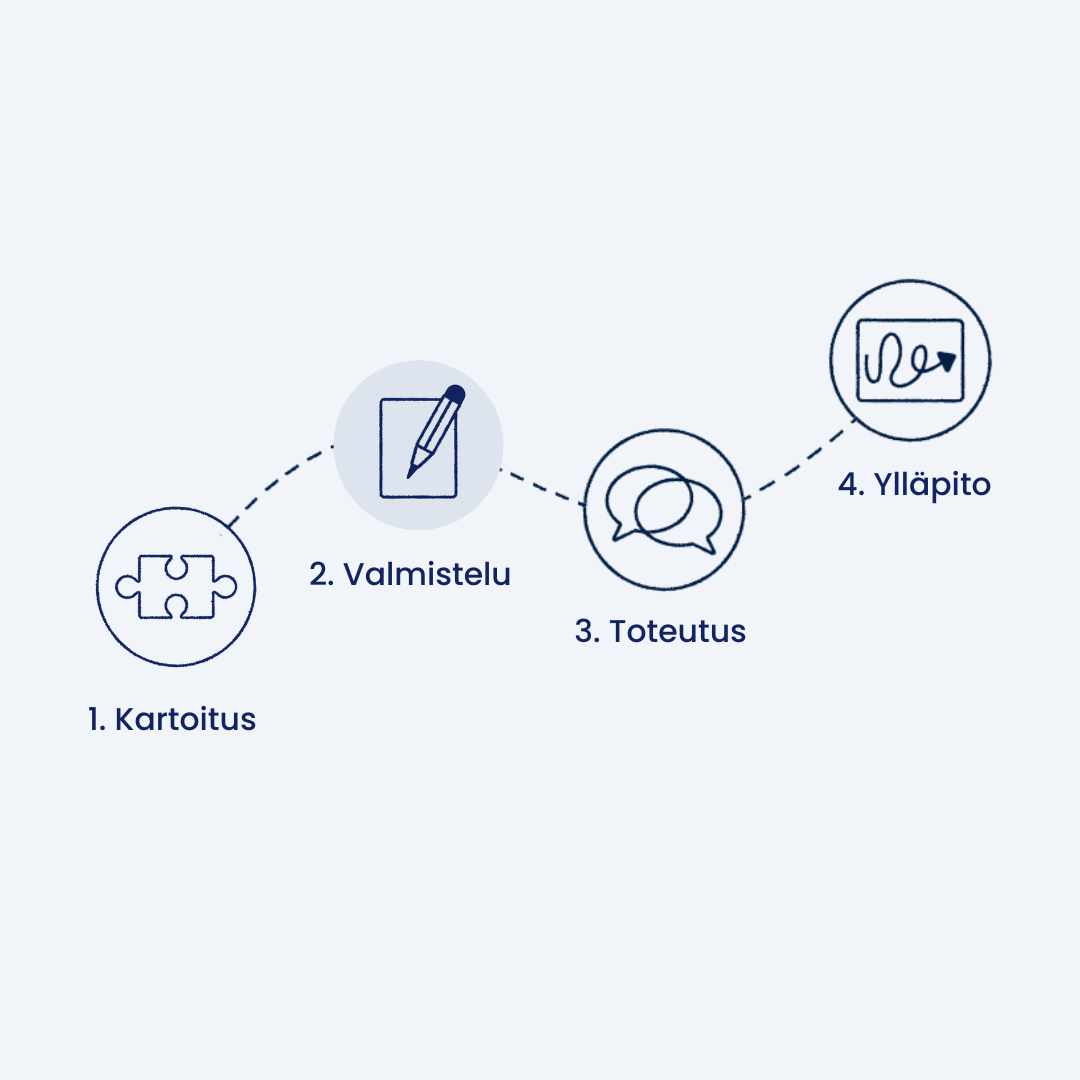
How to prepare for the implementation of the intervention?
In the preparation stage, the organisation creates and ensures the structural preconditions for the implementation of the intervention, such as personnel resources and monitoring structures.
Engaging the participation of employees in planning and the preparation of implementation increases shared understanding of the significance of implementation and how it is carried out. Employees provide valuable information on the intervention’s context of use and customer needs.
It is not advisable to rush things at this stage, as focusing carefully on preparation and planning increases the probability of successful implementation. Well-planned and well-prepared implementation is more than half done!
1. Creating an implementation plan
Creating an implementation plan is an essential part of preparation. The implementation plan is a written action plan that is intended to provide concrete guidance for the implementation of the new intervention in the organisation.
The plan describes the division of duties and responsibilities, basic information on the intervention to be implemented, the goals related to the use of the intervention, the training plan and the potential facilitators and barriers to implementation.
The plan helps to ensure that the intervention is implemented in a controlled and systematic manner. It should be reviewed regularly and updated as necessary.
2. Preparations for intervention training
The planning of training related to the intervention should be done in cooperation with all of the units that will participate in the training. The timing of the training should be carefully considered in relation to other changes and events in the organisation so that the employees participating in the training have time to adopt the new way of working.
It is important to create a training plan that includes the following information:
- The entire content of the training, such as the days of training, potential guidance on the use of the intervention and customer work included in the training.
- The planned timing of training for new employees that will join the organisation later.
- The estimated timing of refresher training and supplementary training for those who have been trained in the intervention.
In addition to the actual training, employees can benefit from longer-term support. It can be implemented in the form of guidance on the use of the intervention, informal mentoring or peer-to-
peer discussions in which employees can deepen their skills together.
This also makes it possible to take advantage of the skills and experience of employees who have a longer history of using the intervention.
How to select employees to be trained in the new intervention?
At least the following factors must be taken into consideration in selection decisions:
- The prerequisites for participation in the training, as specified by the training provider for the intervention (e.g. previous education and training, existing competence).
- The employee must have the time and motivation to use the intervention.
- The employee should have customers that match the target group.
- The employee should be able to commit to the training and the use of the intervention.
- The employee should not have too many interventions in use concurrently.
Identifying facilitators and barriers to implementation
The successful implementation of interventions is heavily dependent on the extent to which facilitators and barriers to implementation can be identified and taken into consideration right from the preparation stage.
Facilitators to the implementation of an intervention may be related to, for example, the workplace community having collectively identified the need for the new intervention, already having existing intervention expertise or perceiving the implementation of the intervention as motivating.
Facilitators to implementation are significant resources of the workplace community and organisation that support the success of the implementation process.
Barriers to implementation may be related to, for example, the perception that the intervention to be implemented does not suit the intended context of use, or the perception that the use of the new intervention will be difficult to reconcile with other work duties.
Identifying barriers helps to anticipate potential challenges and risks related to implementation. Resolving these in advance in cooperation between the supervisor and the employees usually
yields the best outcome.
4. Listing implementation strategies
The implementation plan should also include a list of implementation strategies that support the successful implementation of the intervention. Implementation strategies are measures used to execute a systematic process of implementation.
The measures can resolve barriers to implementation and also strengthen facilitators to implementation.
Many measures are ordinary things related to the planning and management of implementation and the concrete performance of work, such as organising training, ensuring guidance on the use of the intervention or purchasing equipment and tools.
The measures required in each case vary depending on the organisation and the intervention being implemented. The most effective measures are identified through collective discussion and assessment. As the implementation of the intervention progresses, the selected measures can also be specified further or amended.

The pillars of implementation
Main tasks:
- create an implementation plan
- prepare the implementation together with immediate supervisors and employees
- identify, and take into account in the preparation stage, facilitators and barriers to the implementation of the intervention
Responsibilities: The administrative implementation leadership team starts the preparation of the implementation plan and appoints the core implementation team. The core implementation team
continues the work on the implementation plan and the preparation and execution of the implementation of the intervention. The coordinators support this transition and continue to work
with the core implementation team.
Knowledge and capabilities required: Capabilities and knowledge are needed particularly in the areas of change management, communications and the day-to-day operations of the services, such as customer referrals, facility arrangements and the employees’ job descriptions. The core implementation team must include employees being trained in the intervention and their immediate
supervisors.
- Identify the facilitators and barriers to the implementation of the psychosocial intervention and plan measures to address them. Which aspects are already in good order? Which aspects require strengthening and support?
- Focus on motivating communications in which the main principles are as follows:
- clarity about the change process and its goals
- identifying existing capabilities and building on them
- valuing the employees’ professional competence
- All communications related to the implementation of the intervention should be interactive.
In the preparation stage, the focus shifts to the planning and facilitating of implementation also with regard to monitoring. The monitoring of the use of the new intervention should be integrated into
the organisation’s overall knowledge-based management.
The execution of follow-up and tools
- Plan, and record in the implementation plan, how data accumulated on the use of the intervention will be collected, analysed and utilised, and how it will be communicated.
- Determine what measures are required for the implementation of potential performance indicators before the use of the intervention begins.
Making entries in the client information system
- Ensure that the use of the intervention can be recorded in the client information system in the agreed-upon manner.
- Update or prepare instructions on recording entries on the use of the intervention, if necessary. If a code necessary for national monitoring has been assigned to the intervention (such as a procedure code), the instructions must also include guidance on how to enter the code.